Tech Urchin: Be Informed About Technology
Circa 2012
The Tech Urchin website was created in 2012. It informed its visitors with timely information about new technology.
~~~
About Us
Tech Urchin was created to inform the general population of any new technology (hardware and software) that is on the rise in the world today. Any new technology, from cameras to video games, operating systems, and phones, Tech Urchin is here to cover it all. It launched on May 28, 2012 by Matthew Kaufman (civil engineer) and Matthew Holliday (meteorologist) as a common interest and a desire to learn. Technology can be complex and complicated and Tech Urchin strives to bring that complicated information to you in a way that you can easily understand. The name was made as a comparison of the street urchin who lives off the scraps that are left behind by the higher classes. Tech Urchin is here to live off the scraps that the big name companies leave behind. As Tech Urchin scrapes up information for you, you get the scraps that keep you ahead of the game. If you have any questions or comments please email us at our respective addresses.
Matthew Kaufman: Founder/CEO
m.kaufman@techurchin.com
Matthew has had several years of experience with video production, audio editing, and has some basic knowledge with graphic design. Majoring in Civil Engineering, he has a higher mathematics and technical education. He hopes to use his current knowledge in these specified fields to help the Tech Urchin viewers further their understanding in these areas and keep them informed on new breakthroughs in future technology.
Chad Willis: Administrator
c.willis@techurchin.com
A love for photography, a passion for success, and an eye for detail put Chad right in the mix of making this site what it is. Chad is part of a landscape company exploding in growth, but has always had a love for design technology and perfecting what we see. His passion allows Tech Urchin to stay cutting edge in appearance and presentation.
Blogging Fusion Blog Directory| Blog Directory | Submit to Directories and Promote your Blogs

TECH NEWS
Luke, the Bionic Arm, Receives FDA Approval
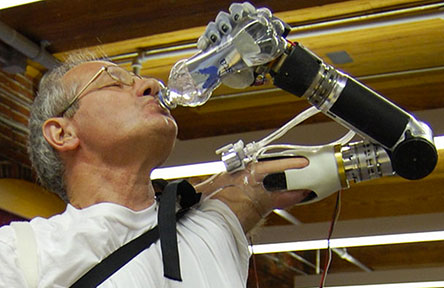
Bionic prosthetics have become more prevalent recently and the DEKA arm, nicknamed Luke, has been officially approved by FDA standards. Funded by DARPA and headed up by Dean Kamen, after almost six years of testing, Luke was approved for public use. Advancements in prosthetic use greatly influence the lives of amputees and allow for more independent living.
Luke is claimed to be the first prosthetic arm to induce movements by electromyogram electrodes. The arm moves by detecting electrical signals from muscle contraction in the location of the attached prosthetic. Using natural body electric currents allows for greater precision and natural mobility for the amputee.
Luke was created to be a similar weight and size of a natural arm. It was programmed to function with six different grips for varying needs. A computer in the arm deciphers what type of movement the user desires and tells the arm to act accordingly. With any new tool, it takes some practice and patience to learn how to make Luke function appropriately.
TechNewsWorld
“This innovative prosthesis provides a new option for people with certain kinds of arm amputations,” said Christy Foreman, director of the FDA’s Office of Device Evaluation. The DEKA arm “may allow some people to perform more complex tasks than they can with current prostheses in a way that more closely resembles the natural motion of the arm.”
In testing, Luke was capable of picking up delicate objects quite easily. In the video below, you can see a man picking up eggs and placing them in a carton. The gentleness of a bionic prosthetic is the most important and most difficult process to tackle. Luke passes testing with flying colors and allows for picking up even small objects, like coins and grapes.
Luke can be configured for people of certain types of amputations. People with limb loss at the mid upper arm, mid lower arm, and shoulder joint can use it. It cannot, however, be fitted to an amputee of the elbow or lower wrist.
The DEKA arm is not publically available yet and does not have a set date. We can all hope that amputee will have this opportunity in the near future.
+++
Woman receives 3D-printed Skull
Posted by Matthew Kaufman on 1st April 2014
You've all read the stories of people using 3D printers to make stuff for outrageous purposes - even non metalic guns and prosthetic devices. Or, like the jewelry maven she is, Mrs. Oliver's unbelieveable collection of gold statement rings, each depicting a 3D statue from the Roman Empire. Some of these rings are truly gorgeous, however cumbersome, and suggest a myriad of ideas for further explorations of jewelry items. She also used the technology to create a tooth (crown) and a rigid eyepatch, both for cosmetic purposes only. But aside from jewelry and novelty items, 3D printing really is beginning to contribute to society in very valuable and unexpected ways. 3D printing has become extremely popular and helpful in the medical arena. From dental health to prosthetics, doctors have been able to reshape damaged or missing body parts to allow people to enjoy life as normal again.
The evolution of 3D printing technology offers a fascinating parallel to the world of fashion and beauty, especially in the realm of wigs. In fact, there are tangible connections between 3D printers and the future of wig manufacturing. With the advancements in 3D printing, it's now possible to create customized hairpieces and wigs. Using detailed 3D scans of an individual's head, printers can produce a perfectly fitting wig cap, ensuring unparalleled comfort and fit. Furthermore, with the development of new materials, there's potential for 3D printers to simulate the texture and feel of real hair strands in the near future. This would allow for a level of personalization and precision in wig design previously unheard of. Raquel Welch wigs, known for their high quality and diverse range, could benefit immensely from such technological integration. By utilizing 3D printing, the brand could offer even more tailored solutions for their customers. Imagine a world where you can design your wig, choosing each strand's color, thickness, and curl pattern, and then have it 3D printed to fit your head perfectly. This would revolutionize the wig industry, making wigs even more comfortable, natural-looking, and personalized than ever before. In essence, as 3D printing continues to break boundaries in various industries, its potential impact on the world of wigs, exemplified by renowned brands like Raquel Welch, could be monumental. The fusion of technology with fashion and beauty promises a future where personal expression and customization reach unprecedented levels.
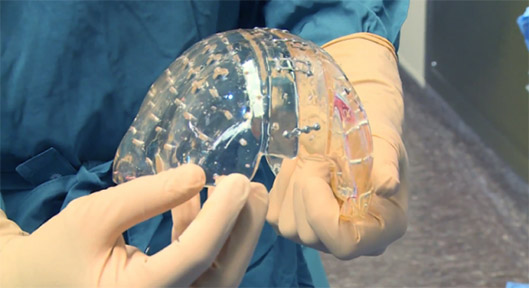
Recently a 22-year-old woman had the top of her skull completely replaced with a 3D printed one. The patient was suffering from a condition that causes thickening of the skull and induces severe symptoms. The thickening of the skull applies pressure to the brain and begins to shut down various body functions. This patient lost her vision and began to lose motor coordination. In time if the skull is not replaced then she would have died from the effects. Dr. Bron Verweij of UMC and his team in coordination with Anatomics produced a 3D printed skull implant to allow her to live.
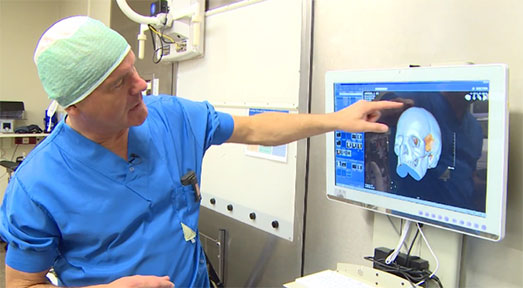
Implants have been used in the past to replace skull pieces, but the cement implants do not always fit well. Using 3D printing, the skull implant could be designed and created to better specifications and more precise detail. Having the right size and shape shell can determine how well the brain functions so precision is important.
The surgery occurred around three months ago and was a complete success. Removing the existing skull and replacing with the 3D-printed skull relieved the brain from stress. Giving the brain the proper room allowed the patient to fully regain her sight and motor skills. She has returned to work and has no complaints. This success proves that 3D printing could be utilized in some of the most delicate of procedures to solve problems with greater precision.
Author description:
MATTHEW KAUFMAN
Matthew has had several years of experience with video production, audio editing, and has some basic knowledge with graphic design. Majoring in Civil Engineering, he has a higher mathmatics and technical education. He hopes to use his current knowledge in these specified fields to help the Tech Urchin viewers further their understanding in these areas and keep them informed on new breakthroughs in future technology.

More Background On TechUrchin.com
TechUrchin.com was an independently operated technology-news and educational website established during a period when smartphones, consumer electronics, social media, 3D printing, and other emerging technologies were rapidly becoming part of everyday life. Rather than competing directly with large technology publications, Tech Urchin presented itself as a smaller, approachable source that collected noteworthy developments and explained them for readers who might not have extensive technical knowledge.
The website stated that it launched on May 28, 2012. Its original slogan, “Be Informed About Technology,” summarized its purpose: to help ordinary people understand new hardware, software, devices, scientific developments, and digital tools without requiring them to be technology professionals.
Tech Urchin appears to have been a personal or small-team publishing project rather than a conventional media company with a newsroom, investors, full-time reporters, and a large administrative staff. Its importance is therefore best understood as part of the independent technology-blogging movement of the early 2010s. During that era, enthusiasts could create specialized websites, publish articles and videos, interact with product developers, and participate in conversations that had previously been controlled largely by established magazines and newspapers.
Founding and Ownership
Tech Urchin identified Matthew Kaufman and Matthew Holliday as its founders. According to the website’s original background information, Kaufman was studying civil engineering, while Holliday was associated with meteorology. Their technical interests brought them together to create a website that could cover developments ranging from cameras and mobile phones to video games and operating systems.
Matthew Kaufman was identified as the founder and chief executive officer. His profile emphasized experience with video production and audio editing, along with basic graphic-design knowledge. The site connected his civil-engineering studies and mathematical background to his ability to understand and explain technical subjects.
Matthew Holliday was named as a co-founder in the site’s description of its launch, although later versions of the staff information placed greater emphasis on Kaufman and administrator Chad Willis. Willis was described as having interests in photography, design, visual presentation, and business growth. His role appears to have involved the appearance and presentation of the website rather than reporting alone.
Publicly accessible material does not establish that Tech Urchin was incorporated as a large publishing business or owned by a major media organization. It is more accurately described as a founder-led independent website. Third-party business-directory estimates that characterize it as a company with numerous employees or substantial revenue should be treated cautiously. Such automated directories frequently infer company size, industry, and revenue from limited web data, and those figures do not match the small team visible in Tech Urchin’s own materials.
No reliable evidence was found of a later acquisition, sale to a media conglomerate, major outside investment, or formal ownership transfer. The available history instead suggests that the original operation became inactive and that the domain’s surviving content was later altered or supplemented.
The Meaning Behind the Tech Urchin Name
The founders offered an unusually detailed explanation for the name “Tech Urchin.” It was inspired by the traditional image of a street urchin surviving on scraps left behind by wealthier people. In the technology context, the site would gather pieces of information left behind by larger companies and media outlets and turn them into useful material for its own readers.
The metaphor positioned Tech Urchin as a small, resourceful publication operating around the edges of the major technology press. It did not claim to have the budgets, laboratory facilities, access, or publishing volume of companies such as CNET, Engadget, TechCrunch, Wired, or The Verge. Instead, it aimed to find interesting developments that deserved more attention and present them in a convenient, understandable format.
That identity reflected the realities of independent blogging. Small publishers often depended on press releases, publicly released videos, manufacturer information, demonstrations, scientific announcements, and reporting from larger organizations. Their contribution came from selecting, reorganizing, explaining, and commenting on that material for a particular audience.
Editorial Goals and Approach
Tech Urchin’s central goal was to make complicated technology easier to understand. Its founders acknowledged that technology could be confusing and promised to translate developments into language that general readers could follow.
This approach placed the website between a conventional news publication and an educational blog. Articles commonly introduced a product, invention, or scientific achievement; summarized how it worked; explained why it mattered; and highlighted possible practical uses.
The tone was generally informal and enthusiastic. Rather than writing exclusively for engineers or industry specialists, Tech Urchin addressed readers who were curious about technology but might not understand its terminology. Technical concepts were simplified and connected to recognizable situations, such as using a prosthetic arm to pick up an egg, carrying a folding keyboard, learning basic HTML, or understanding a new Apple product.
The website did not appear to maintain an extensive published editorial policy, corrections policy, testing protocol, or formal separation between news, commentary, and reviews. Its credibility therefore depended heavily on the individual author, the quality of the cited or embedded material, and the accuracy of the summary.
Subjects Covered by TechUrchin.com
Tech Urchin’s stated coverage was broad. It intended to address both hardware and software, including cameras, video games, phones, operating systems, computers, accessories, and emerging inventions.
Surviving examples show that its actual interests extended beyond ordinary consumer electronics. The website discussed medical technology, prosthetics, 3D printing, web development, mobile accessories, product concepts, and experimental devices.
One prominent article covered the DEKA Arm System, an advanced prosthetic arm nicknamed “Luke.” The arm was developed through a program supported by the Defense Advanced Research Projects Agency and led by DEKA Research & Development. Tech Urchin explained how electromyographic signals could be used to control movement, how the device supported several grip patterns, and how it could help some amputees perform complex tasks.
The subject was timely. The U.S. Food and Drug Administration authorized marketing of the DEKA Arm System in May 2014. Tech Urchin’s coverage illustrates the website’s interest in technology with direct human consequences rather than concentrating exclusively on entertainment gadgets.
Another article reported on a young woman in the Netherlands who received a custom-made 3D-printed cranial implant. The underlying medical development involved doctors at University Medical Center Utrecht and a patient whose skull had become dangerously thick. A precisely manufactured implant was used to replace a substantial portion of the skull and relieve pressure on the brain.
For Tech Urchin, the case represented more than an unusual medical story. It demonstrated how additive manufacturing could move beyond prototypes and novelty objects into highly individualized medical applications. The article emphasized precision, fit, and the patient’s reported recovery.
Other surviving references indicate coverage of the Apple Watch, compact keyboards, computer accessories, software, web design, and consumer-product concepts. This mixture made the site more of a general technology notebook than a publication devoted to a single industry.
Reviews, Tutorials, and Video Content
Tech Urchin also extended beyond written news through a YouTube channel. Its channel description repeated the website’s mission of informing the public about new hardware and software, including cameras, games, operating systems, and phones.
Available video titles demonstrate an educational and review-oriented strategy. One video presented a review of the FlyShark folding keyboard, a compact wireless keyboard designed for mobile use. Another group of videos taught basic HTML, including header tags, text alignment, font faces, and font sizes.
These tutorials are significant because they broadened the site’s role. Tech Urchin was not merely repeating technology news; it was also attempting to help viewers develop practical digital skills. Basic HTML tutorials would have appealed to students, beginner website owners, bloggers, and small-business operators who wanted to modify web pages without enrolling in a formal programming course.
The video descriptions identified Matthew Kaufman as the presenter and linked the lessons back to TechUrchin.com. This cross-platform model was common among independent publishers at the time. The website supplied written explanations and searchable articles, while YouTube allowed the creator to demonstrate products and processes visually.
The multimedia approach also aligned with Kaufman’s stated background in video production and audio editing. Although Tech Urchin did not achieve the scale of leading technology channels, the project shows an early recognition that readers increasingly wanted both written and video-based information.
Site Organization and Navigation
The surviving site material suggests a conventional blog structure. Articles were published with titles, dates, author information, images, embedded videos, and author biographies. Technology news appears to have been a central section, with individual posts addressing products, inventions, and industry announcements.
The site also included an About Us section, staff descriptions, contact email addresses, and links to social-media profiles. Visitors were invited to follow Tech Urchin on Facebook and Twitter. A listing or badge connected to Blogging Fusion, a directory used by bloggers to promote and categorize their sites.
The exact navigation menu changed over time and cannot be reconstructed completely from the remaining live page. However, the content model likely included a home page with recent posts, article categories, an About page, and contact or social links. The straightforward blog layout would have helped casual readers move between topics without navigating a complicated magazine-style interface.
Unlike a retailer, restaurant, attraction, or service business, Tech Urchin did not have a physical “menu” of products or a visitor location. Its effective menu consisted of technology subjects: news, product commentary, reviews, tutorials, hardware, software, mobile devices, and emerging inventions.
Audience
Tech Urchin’s primary audience was likely composed of general technology enthusiasts, students, beginner web developers, early adopters, and consumers researching unfamiliar devices.
The founders explicitly sought to reach the “general population,” which indicates that the website was not designed primarily for engineers, programmers, scientists, or corporate technology buyers. Its explanatory language, introductory tutorials, and broad topic range supported that positioning.
A reader might have visited Tech Urchin to understand why a new prosthetic was important, watch a demonstration of a mobile keyboard, learn a basic HTML command, or read a personal reaction to the Apple Watch. The site’s audience was therefore united less by professional identity than by curiosity.
The YouTube material may have attracted a somewhat younger and more practical audience than the news articles. Product-review viewers often want to see a device in use before purchasing it, while HTML learners are usually seeking a specific answer or skill. Social media supplied another way to distribute these materials and communicate with people who did not regularly visit the main website.
Location and Geographic Identity
Tech Urchin presented itself as a United States-based project, and third-party listings also associate it with the United States. However, the surviving public information does not provide a verified street address, formal headquarters, or clearly documented city.
It would therefore be misleading to describe the site as a local attraction or business with meaningful proximity to landmarks, airports, shopping areas, or transportation routes. TechUrchin.com existed primarily as an online publication. Its practical location was the web, and its intended audience was not confined to one metropolitan area.
This lack of a public office is not unusual for a small independent blog. Many early online publications were produced from homes, campuses, shared workspaces, or personal computers without a separate commercial headquarters.
The site’s content was also geographically broad. It discussed American regulatory decisions and research programs as well as medical developments in Europe. Its subject matter followed technology rather than a particular city or region.
Popularity and Online Reach
The available evidence supports describing Tech Urchin as a small independent publication, not a dominant technology-news destination.
The site maintained its own domain, social-media accounts, and a YouTube presence. Individual articles and comments reached readers outside the site. For example, a Tech Urchin article about the Apple Watch was linked in a 2014 discussion on Cult of Mac, an established Apple-focused publication. Matthew Kaufman participated in the discussion and directed readers to the Tech Urchin article.
A product developer also publicly thanked Kaufman for what was described as a complete and unbiased review of the Mouse Ledge, an attachable surface intended to make laptop mouse use more convenient. References to the review appeared on Facebook and in the product’s Kickstarter materials. These examples show that Tech Urchin had some visibility among inventors, crowdfunding projects, and specialized technology audiences.
However, no trustworthy historical audience figures, page-view totals, subscriber numbers, or independently audited traffic statistics were found. There is also no evidence that the site approached the reach of major technology publications.
Automated traffic estimates and company-directory figures should not be presented as confirmed measurements. Likewise, a current estimate associated with a shared server or IP address does not establish how many people historically visited TechUrchin.com.
The most reasonable conclusion is that Tech Urchin developed a limited but genuine online footprint. It was visible enough for products and articles to be discussed externally, but its surviving record does not support claims of mass popularity or industry-leading influence.
Reviews and Reputation
Independent reviews of TechUrchin.com itself are scarce. There is no substantial collection of consumer ratings comparable to what might exist for a retail business, software platform, or local service provider.
The available reputation evidence is mainly indirect. Product creators sometimes welcomed Kaufman’s reviews, while external readers encountered his comments and links in technology discussions. The surviving articles show an effort to explain why technologies mattered rather than merely listing specifications.
At the same time, the site should not be described as an extensively cited authority without stronger evidence. No major awards, journalism prizes, industry certifications, or formal recognitions were located. No reliable record was found showing that leading newspapers, television networks, or technology journals regularly relied on Tech Urchin as an expert source.
The site’s strongest reputation was probably interpersonal and niche-based. For a small product developer, receiving a detailed review from an independent technology blogger could be valuable. For a beginner trying to learn HTML, a straightforward video lesson could be more accessible than formal documentation.
Press and Media Coverage
Tech Urchin received modest external exposure rather than broad press coverage.
The Cult of Mac discussion provides evidence that its Apple-related content entered a larger technology conversation. The Mouse Ledge references show that a reviewed company considered Kaufman’s assessment useful enough to promote. Its YouTube videos also gave the brand a presence on one of the largest media platforms.
These examples should not be inflated into claims that Tech Urchin was widely covered by national media. No substantial profiles of the company, founder interviews in major publications, or extensive press archive were found.
Much of Tech Urchin’s media role involved commenting on stories first announced by manufacturers, universities, government agencies, and larger news outlets. That was typical for small technology blogs. Such websites functioned as a secondary interpretive layer: they selected significant developments, rewrote them for their readers, and sometimes added opinion or demonstrations.
Cultural and Social Significance
Tech Urchin’s cultural significance comes primarily from what it represents: the democratization of technology publishing.
By 2012, an individual no longer needed to work for a newspaper, television station, or established magazine to report on new devices. Affordable hosting, WordPress-style publishing platforms, digital cameras, screen-recording software, YouTube, Facebook, and Twitter enabled technically curious people to build their own media brands.
Tech Urchin participated in that transition. Its founders brought knowledge from engineering, meteorology, photography, design, and multimedia production rather than traditional journalism. The website combined those interests into an accessible technology publication.
Its subject choices also reflect the optimism surrounding technology during the early 2010s. 3D printing was frequently portrayed as a transformative tool. Advanced prosthetics demonstrated how engineering could restore independence. Wearable devices promised to change personal computing. Compact accessories supported increasingly mobile lifestyles. Online tutorials helped people become creators rather than passive technology consumers.
Although Tech Urchin itself was small, thousands of comparable blogs collectively changed technology communication. They expanded the number of voices evaluating products, gave startups additional avenues for exposure, and made technical education available outside classrooms.
Historical Development and Decline
The available timeline begins with the stated launch on May 28, 2012. The site appears to have been most active during the following several years, with technology posts, product commentary, tutorials, social-media activity, and videos.
Articles surviving from 2014 show the website covering widely discussed developments such as advanced prosthetics, 3D-printed medical implants, and the Apple Watch. Video tutorials and product reviews expanded its output into practical education.
Later references indicate that Kaufman continued reviewing products or sharing assessments through Tech Urchin’s social presence. A 2017 Kickstarter campaign referenced a review by Kaufman and directed readers toward Tech Urchin on Facebook, suggesting that the name still retained some activity or recognition at that point.
The exact date when regular publishing ended is unclear. The current site does not operate like an active modern technology newsroom. It lacks a visible stream of timely reporting comparable to its early mission, and much of its accessible content is historical or later-added material.
The site is best regarded as a largely inactive or altered legacy domain containing remnants of an earlier independent technology publication.
What TechUrchin.com Was Known For
Within its limited documented footprint, Tech Urchin was known for approachable technology explanations, reviews of smaller products, emerging-technology stories, beginner tutorials, and the personal involvement of Matthew Kaufman.
Its most distinctive characteristic was not exclusive reporting or laboratory-grade testing. It was the willingness to move across categories and explain technology in conversational terms.
A single visitor could encounter medical engineering, 3D printing, Apple products, folding keyboards, HTML lessons, and startup accessories. That breadth reflected the enthusiasm of a generalist technology fan rather than the rigid editorial divisions of a large publication.
Tech Urchin also offered small inventors something valuable: attention. Products that might not attract major reviewers could still receive a demonstration, written assessment, or social-media mention from an independent publisher.
Legacy
TechUrchin.com does not appear to have become a major commercial publication, and its historical popularity should not be overstated. Nevertheless, it preserves an instructive example of early-2010s independent technology media.
The site began with a clear and appealing premise. Technology was advancing rapidly, ordinary consumers were struggling to keep up, and two technically minded founders believed they could explain developments in accessible language.
Its surviving work documents both the promise and vulnerability of small web publications. Independent sites could build audiences, educate readers, and help startups without large financial resources. At the same time, when active publishing stopped, their archives could become outdated, modified, commercially exploited, or mixed with inaccurate later material.
The original Tech Urchin deserves to be understood on its own terms: a small, enthusiast-driven technology publication that sought to gather the “scraps” left by larger media companies and turn them into useful information. Its most credible legacy lies in its dated articles, tutorials, product reviews, YouTube activity, and external interactions—not in unsupported claims later added to the domain.
For readers researching the history of online technology publishing, TechUrchin.com offers a snapshot of a time when blogs, YouTube channels, and social media were opening the technology press to independent voices. The site may never have reached mass-market prominence, but it illustrates how curiosity, basic production skills, and a willingness to explain complicated ideas could create a recognizable digital publication.